
“What’s the best water filter?”
It’s one of the questions I’ve been asked for years.
And along the way, my answer has changed a lot. Sometimes I’m not even sure what to say!

Not because I don’t care about water quality. Quite the opposite. We’ve filtered our water for at least 15 years because I think it’s one of the simplest ways to reduce your family’s exposure to unnecessary chemicals.
We know pharmaceuticals make their way into our waterways. Millions of people take prescription medications, including hormonal birth control and hormone replacement therapy, and many of those compounds aren’t completely removed during municipal water treatment. (Scary!!)
Researchers continue to find trace amounts of pharmaceuticals in drinking water supplies. Even though they’re measured in very small concentrations, I would rather remove as many of those contaminants as possible than simply “hope” they’re harmless.
Fluoride is another concern for our family. I know it’s a controversial topic, but after reading the research, I don’t believe it’s something we need to consume in our drinking water where we can’t measure it. If I choose to use fluoride for dental health, I’d rather do that topically through toothpaste or treatments at my dentist’s than ingest it every day.
Water Filtering Solution for Smaller Spaces

For years, our solution was a Berkey.
I was a huge fan! I shouted praises from the rooftops!
One of my favorite features had nothing to do with everyday water quality. I loved knowing that if there were ever an emergency, we’d still have safe drinking water. We could filter lake water, rainwater, melted snow, or other questionable water sources if we absolutely had to! That’s an incredible layer of preparedness, and it’s one of the reasons we’ll probably never completely part with our Berkey.
But no product is perfect.
Keeping it filled for a family was a constant chore. I was doing slightly less rooftop shouting.
As we started dreaming about remodeling our kitchen, I found myself wondering whether there was a better long-term solution. Could we have filtered water at every faucet? Would a whole house filtration system serve us well? Was there a system that removed even more contaminants? Was there a better way to address newer concerns like pharmaceuticals and hormone-disrupting compounds?
Need More Baby Steps?

Here at Kitchen Stewardship, we’ve always been all about the baby steps. But if you’re just starting your real food and natural living journey, sifting through all that we’ve shared here over the years can be totally overwhelming.
That’s why we took the best 10 rookie “Monday Missions” that used to post once a week and got them all spruced up to send to your inbox – once a week on Mondays, so you can learn to be a kitchen steward one baby step at a time, in a doable sequence.
Sign up to get weekly challenges and teaching on key topics like meal planning, homemade foods that save the budget (and don’t take too much time), what to cut out of your pantry, and more.
Doing the Research on Home Water Filtration
The deeper I dug, the more confusing the answers became.
- Every company claimed to have the best technology.
- Every website had different testing.
- Every expert seemed convinced everyone else was wrong.
So instead of simply reading marketing claims, I decided to get information from the top.
I interviewed the founders, owners, and technical experts behind many of the most respected home water filtration companies. I asked hard questions about contaminants, testing, certifications, maintenance, whole-house systems versus point-of-use filters, reverse osmosis, carbon filtration, fluoride, PFAS, pharmaceuticals, and how their system actually performs for real families.
This series shares everything I learned!
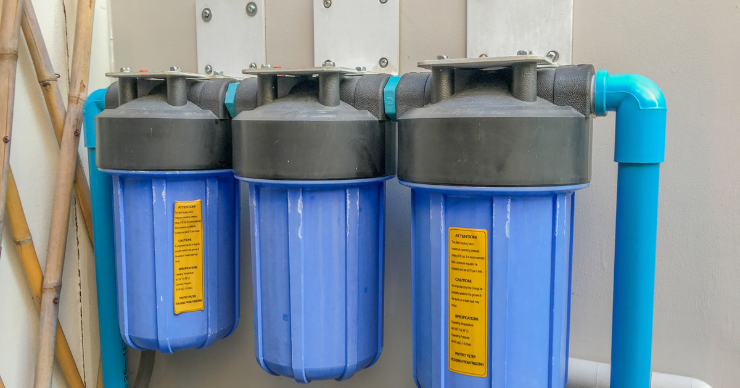
You’ll hear directly from the people who design these systems, along with my take on the strengths and weaknesses of each approach. I’ll also explain why, after all that research, we ultimately chose a Radiant Life under-counter system for our own home.
First Decision: Where Do You Want Your Water Filter?
Before worrying about contaminants, carbon, ceramic media, or any other science-geek terminology, you need to begin with something much more practical:
Where is this thing going to live?
There are basically three approaches.
Countertop water filters
A countertop filter connects directly to a traditional kitchen faucet.
Most standard faucets have an aerator screen at the end of the spout. A countertop system connects there using an adapter and something called a diverter valve.
That means when you’re washing dishes, your faucet works normally. When you want filtered drinking water, you turn on the faucet and use the diverter valve to send water through the filter instead.
They don’t take up a ton of space, but countertop space is precious real estate in my kitchen, so I’m counting every inch!
The other consideration is that countertop systems may be limited by how many filter cartridges can fit in the unit. If your filtration needs require multiple stages, you may need more space.
Gravity water filters
Gravity systems don’t connect to the faucet at all. You pour water into the upper chamber and gravity moves it through the filter into a lower chamber, where you dispense it through a spigot.
There’s one very useful advantage here: it doesn’t matter what kind of faucet you have.
That matters because modern kitchen faucets can be difficult or impossible to adapt to some countertop systems. But the obvious tradeoff is also the thing our family was ready to leave behind: you have to keep filling it.
And filling it.
And filling it.
I know this is not exactly digging a ditch, but when you’re a parent, sometimes eliminating one recurring job feels pretty fabulous.
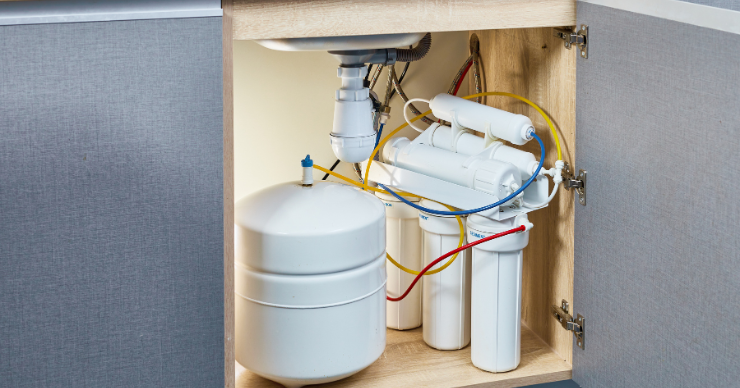
Undercounter water filters
An undercounter system keeps almost everything out of sight. The filtering equipment lives beneath the sink, while a small dedicated faucet sits near your regular kitchen faucet.
Turn it on, get your drinking water, turn it off.
The part that intimidates many homeowners is drilling another hole in the sink or countertop, but this may not actually be necessary. Many kitchen sinks already have unused openings or knockouts, or perhaps a hole currently occupied by a soap dispenser you don’t care about.
If the hole already exists, installation becomes considerably less scary; and once the system is installed, visually there’s very little going on above the counter.
That was very appealing to me in our kitchen remodel!
So Which Water Filter Is “Best”?
You know I love a definitive answer.
Parents have enough decisions.
Tell me the good one and let me buy it!
Unfortunately, water filtration doesn’t work quite that neatly.
The best setup depends on:
- Your water source
- The contaminants you care most about
- Your available countertop or under-sink space
- Whether your faucet can accept a countertop diverter
- Whether you want one cartridge or multiple stages
- How much maintenance you’re willing to do
- Whether removing fluoride or emerging contaminants is a priority
- Your budget
Helping You Understand Water Filtration and What System Works for You
My goal isn’t to convince you that everyone needs the exact same filter.
It’s to help you understand the tradeoffs, ask better questions, and choose the system that makes the most sense for your family’s priorities, your home, and your budget.
Over the next few weeks, I will share all of my interviews and research with you. So you won’t have to ask anyone, “What’s the best water filter?”
You can figure out which one works the best for you!
Here are the brands I will be sharing my interviews about:


